New research defines the role of the Green Digital Fashion Manager
13 January 2026
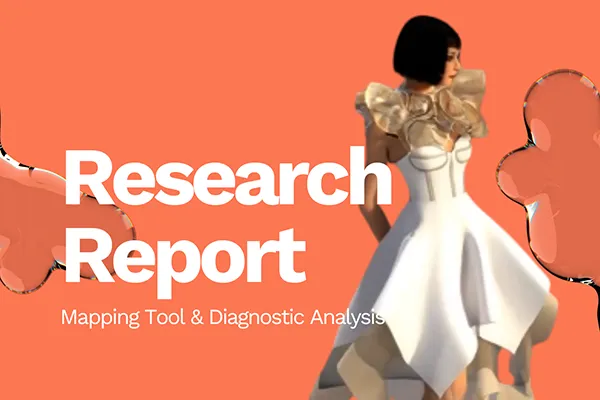
The future of fashion will be written at the intersection of technology and sustainability. The Erasmus+ research project Green DigiFashTech Manager has now delivered a comprehensive report that maps this transformation and defines the skills needed to lead it.
Drawing on the analysis of over twenty digital technologies, case studies from Greece, the Netherlands, and North Macedonia, and an extensive academic review, the research confirms a clear pattern: digitalisation is no longer optional—it is a decisive driver of environmental impact reduction across the fashion and textile sector.
Two main categories of digital tools emerge from the findings. The first consists of solutions for digital visualisation and garment prototyping, which enable designers to create and test products virtually rather than relying on physical samples. By reducing the need for material prototyping, these tools help lower waste, decrease energy consumption, and shorten development timelines, ultimately making the design process more efficient and sustainable.
The second category includes tools focused on traceability, transparency, and sustainability management across the value chain. These platforms support companies in monitoring materials, assessing environmental and social impacts, and implementing circular strategies such as reuse, repair, and resale. Together, both groups of technologies play a critical role in supporting fashion and textile companies as they transition toward more digitalised and sustainable business models.
Yet the report also reveals a consistent set of obstacles. Across all countries, companies face high costs for software licences and hardware, cultural resistance to change, and a shortage of professionals capable of working fluently with advanced digital tools and sustainability data. Small and medium-sized enterprises are particularly affected, risking exclusion from the sector’s green and digital transition.
These findings directly inform the creation of a new professional profile: the Green Digital Fashion Manager. This role is envisioned as a bridge between creativity, technology, and responsibility. Future professionals will need to master digital prototyping, interpret sustainability metrics, design circular systems, and lead organisational change. Just as importantly, they must understand the ethical and regulatory dimensions of emerging technologies—from AI-generated design to data privacy and digital product passports.
To meet this demand, vocational education and training must evolve. The report proposes a staged learning pathway:
- Foundational modules in digital drawing and 2D CAD, building digital-first reflexes
- Intermediate training that integrates 3D simulation with impact dashboards and sustainability analytics
- Advanced stages focused on management, ethics, regulatory literacy, and real-world implementation with industry partners
For policymakers and industry leaders, the message is equally clear. Accelerating adoption requires targeted financial incentives for SMEs, hardware support schemes, and sector-wide up-skilling programmes in digital literacy, AI, and sustainability reporting. Ethical and regulatory training must become a standard component of professional development.
The Green DigiFashTech Manager report demonstrates that the fashion industry’s transformation is not only technological—it is cultural and educational. By aligning tools, skills, and values, the project lays the groundwork for a workforce capable of guiding Europe’s fashion ecosystem through its twin transition: digital and green. In doing so, it reframes innovation not as speed or novelty, but as a pathway to resilience, transparency, and genuine environmental responsibility.
To explore the full findings, recommendations, and methodology of the Green DigiFashTech Manager project, read the full report here.